property inspection, property assessment, commercial lending, appraisal
Understand how a commercial property inspection differs from a property assessment, including purpose, scope, and how each is used in lending workflows.

In commercial real estate and lending, the terms "inspection" and "assessment" are often used interchangeably. While both processes involve evaluating a property, they serve different purposes, are performed by different professionals, and produce different outputs.
Understanding the distinction between a property inspection and a property assessment is essential for lending teams, asset managers, and AEC professionals involved in real estate transactions, servicing, or compliance work.
This guide explains the difference between inspections and assessments, how each is used, and what teams should know when reviewing or commissioning either type of report.
Inspection vs. assessment: a side-by-side comparison
Category | Property Inspection | Property Assessment |
|---|---|---|
Definition | A structured, on-site documentation of current physical conditions | A formal valuation of a property's market or taxable value |
Primary purpose | To record existing conditions, use, and observable risks | To estimate current market value or assessed tax value |
Performed by | Inspectors, field agents, architects, or lenders | Licensed appraisers, municipal assessors, or valuation professionals |
Scope | Building systems, envelope, site conditions, occupancy, collateral | Market comparables, income analysis, cost to replace, depreciation |
Methodology | Visual observation and field documentation | Data modeling, financial analysis, and market research |
Output format | Condition report with photos and field notes | Appraisal or assessment report with value estimate and supporting data |
Regulatory use | Often required by lenders for draw reviews, loan monitoring, or servicing audits | Used to set loan amounts, tax bills, or validate purchase price |
Relevance in lending | Helps verify property condition and usage during the loan term | Supports initial underwriting, refinancing, or sale transactions |
What a property inspection includes
A commercial property inspection is typically a repeatable, checklist-driven process conducted on-site. It focuses on the observable condition of:
Roofs, facades, and building envelope
Foundation, doors, and entries
Parking lots, lighting, and signage
HVAC, plumbing, and electrical (visual only)
Collateral and tenant use
Compliance with life safety, accessibility, or zoning where relevant
Inspections are often performed by internal lending teams, third-party field agents, or AEC professionals. The documentation may include photographs, time-stamped notes, tagged conditions, and a structured report used by servicing or credit staff. For example, a lender might require annual inspections of a retail building to confirm continued operation and maintenance.
What a property assessment includes
A property assessment, often called an appraisal or valuation, is performed to estimate a property's monetary value. This could be its fair market value (for lending or sale) or its assessed value (for tax purposes). Assessments do not focus on physical defects unless those conditions directly impact the valuation.
An assessment may consider:
Comparable recent sales in the area
Projected income and operating costs for income-producing properties
Replacement cost minus depreciation
Zoning or land use restrictions
Unlike inspections, assessments may not involve a site visit or detailed condition review. Instead, assessors rely on data sets, prior records, and modeling. The final deliverable is a valuation report, not a condition report.
Assessments are often required during:
New loan underwriting or refinancing
Tax reassessment cycles
Property sales or acquisitions
Portfolio valuation reviews
Why this distinction matters for lenders
In many lending workflows, inspections and assessments are both required, but at different stages and for different purposes.
The assessment supports the initial decision to lend by providing a value estimate. This helps define the loan-to-value ratio, pricing, and underwriting limits.
The inspection verifies the property's ongoing use, maintenance, and compliance during the life of the loan. This supports servicing, risk management, and draw release decisions.
For example, an office building may be appraised at $3.5 million based on lease income and comparable sales. A later inspection might reveal that part of the building is vacant or has deferred maintenance issues. The lender uses the assessment for valuation and the inspection for condition monitoring.
Where documentation overlaps and diverges
It is not uncommon for inspections and assessments to reference each other. For example, a valuation report may mention observable physical conditions or note risks that affect marketability. However, only an inspection provides detailed condition records tied to location, date, and visual evidence.
Inspection data is often more granular, system-specific, and image-based. Assessment data is modeled, comparative, and focused on economic performance.
How teams document inspections using Layer
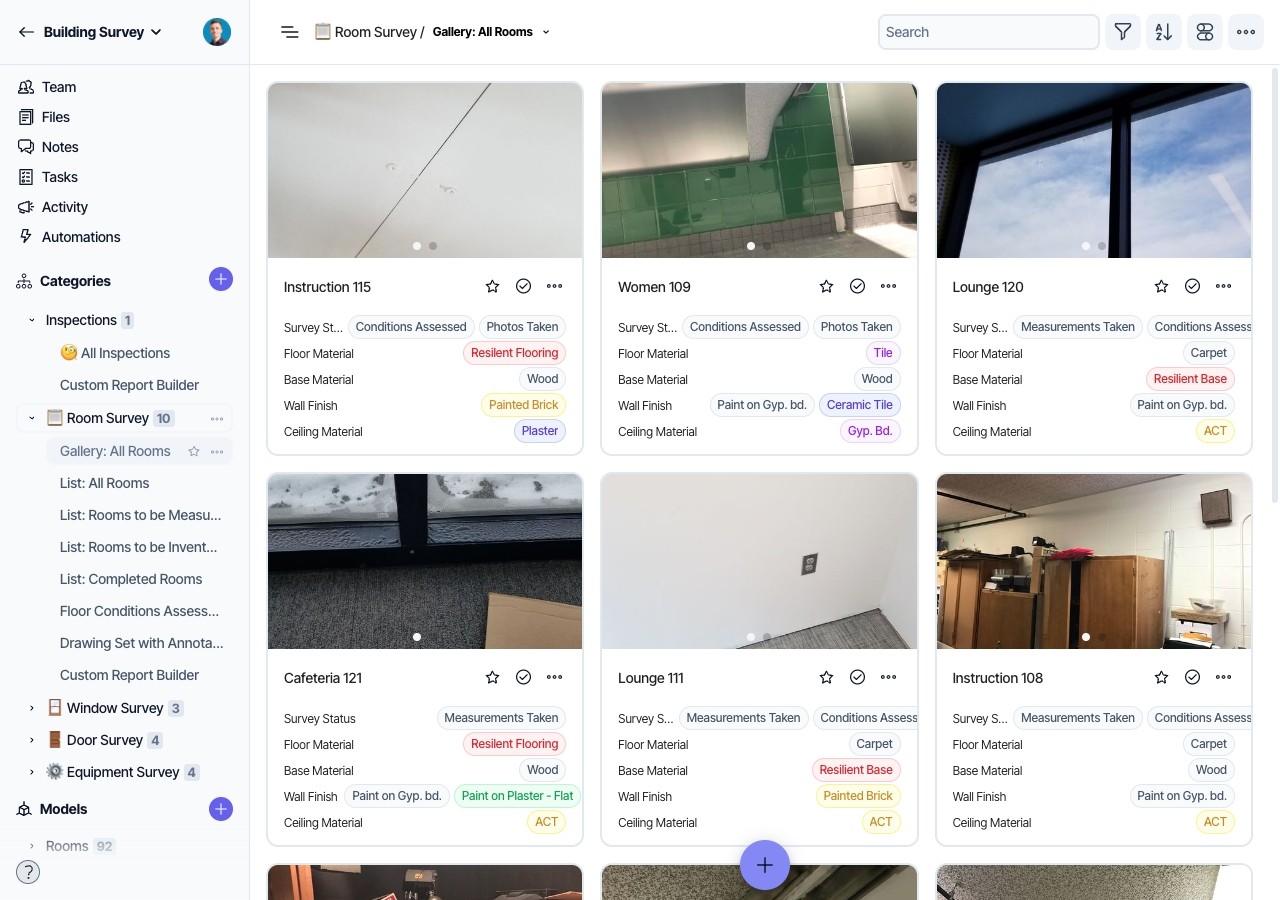
While assessments are usually performed outside the bank, inspections are often documented by internal teams or field agents. Layer supports these teams by providing:
Field-based inspection templates tailored to loan type or asset class
Visual markup tools that attach notes and photos to floor plans or elevations
Location-based tagging of issues or observations
Exportable reports formatted for servicing or credit teams
Because Layer keeps documentation tied to specific dates and locations, it supports repeat inspections, risk tracking, and portfolio comparisons over time. Explore the Commercial Property Inspection Template, or learn how teams use Layer in the field with Tips for Using Layer in the Field.