Submittals
Learn what architects are responsible for when reviewing submittals, what to document, and how to avoid scope creep during construction.

During construction, architects receive a steady stream of submittals: product data, shop drawings, and samples. These are critical to building the project. But when a contractor sends a submittal marked "for review," what exactly are you expected to do?
Submittal review is one of the most routine tasks during construction administration. It is also one of the most misunderstood. This article explains what a submittal is, what architects are responsible for reviewing, and how to document your role without expanding your scope.
What is a submittal?
A submittal is a document or sample that shows how the contractor intends to meet specific requirements in the contract documents. Submittals are used to verify materials, installation methods, or product selections before construction proceeds.
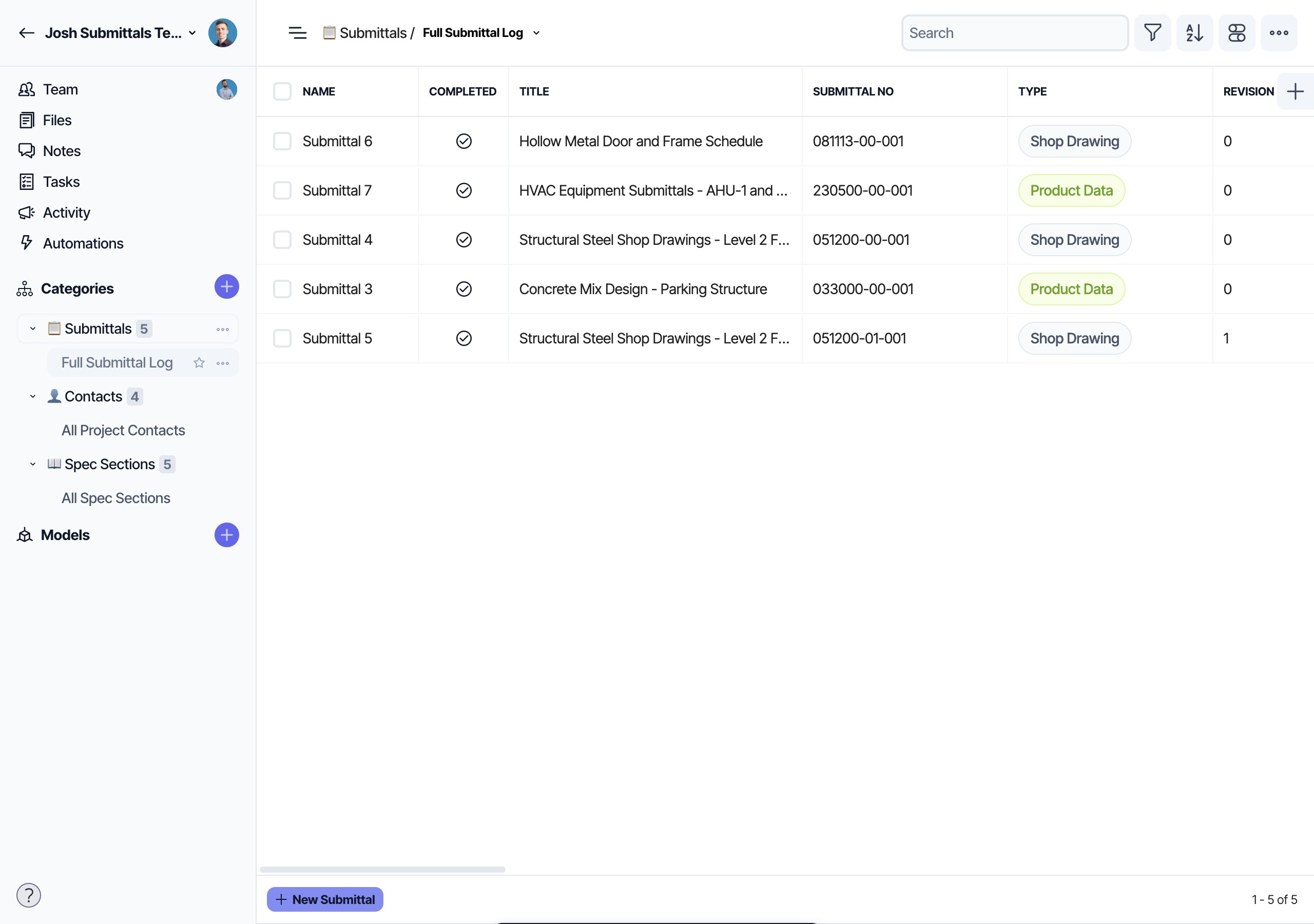
Common types of submittals include:
Shop drawings
Product data and cut sheets
Samples and mockups
Manufacturer certifications
Finish schedules
Submittals are usually required by the specifications. Each section outlines which items must be submitted, when they are due, and what the review process looks like.
Who manages the submittal process?
The contractor is responsible for managing the submittal process. This includes:
Preparing and collecting submittals from vendors or subcontractors
Reviewing them for accuracy and coordination
Submitting them to the architect as required
The architect’s responsibility is to review submittals for general conformance with design intent. The architect is not expected to verify dimensions, enforce codes, or check fabrication procedures unless specifically required by contract.

What architects are expected to review
Architects typically review:
Whether the submittal aligns with the design drawings and specifications
Whether the materials and products meet required performance criteria
Whether substitutions have been formally approved
Whether coordination is shown with related systems or assemblies
Whether aesthetic or finish requirements have been met
The review is limited to what is shown in the construction documents. If something is not included in the drawings or specs, it may not be within the architect’s scope to review.
What architects are not responsible for
Architects are not responsible for:
Means and methods of construction
Fabrication processes or internal coordination between trades
Field measurements or site logistics
Code compliance unless specifically assigned
Product testing or guarantees
These items are managed by the contractor. Submittal review does not transfer responsibility for performance, safety, or accuracy to the architect.
Submittal review in construction administration
Submittals are reviewed alongside RFIs, field reports, and progress documentation. A clear process helps avoid confusion and delays.
A typical workflow includes:
Contractor collects, reviews, and submits the item
Architect logs the submittal and assigns it internally
Architect reviews for conformance and adds comments if needed
Architect returns the submittal with a formal response
Submittal is archived as part of the record
Review periods are usually defined in the contract. Delays in returning submittals can affect lead times or schedules, so review should be timely but limited to scope.
Standard review responses
Most firms use consistent responses to clarify what action is being taken. These may include:
Approved
Approved as noted
Revise and resubmit
Rejected
Not reviewed (for incomplete or out-of-scope items)
Comments should be clear and tied to specific requirements in the documents. Avoid vague language or personal opinions.
Tips for reviewing submittals effectively
Use a consistent form or checklist
Refer to specific drawing sheets or specification sections
Limit your review to design intent
Do not write instructions to fabricators or vendors
Ask for clarification through the contractor, not directly
Track review dates, return times, and comments in a dedicated CA platform. Layer's Submittals Template is purpose-built for this workflow, with automatic deadline tracking, status logging, and transmittal generation included.
If you're tracking submittals digitally, link each reviewed item to related RFIs or field observations to avoid duplication or confusion during site coordination. For a step-by-step guide to setting up Layer for your project's submittal process, see the resources below.
Further resources
Managing Submittals in Layer: A Getting Started Guide explains how to apply the Layer Submittals Template to a new project, import your existing GC log, and get your team managing the full review process in Layer.
Layer Documentation covers Layer projects, views, and document templates.