Field Data
Understand the key differences between assessments, inspections, and surveys in architecture and construction workflows.


In architecture and construction, the terms assessment, inspection, and survey are often used together or interchangeably. However, each term describes a different scope of work. Each has a specific purpose, with different methods, outcomes, and requirements for how the information is structured, documented, and used.
Using the correct term helps teams stay aligned on the scope of work and the type of data being collected. It also ensures that the client receives information that supports decisions, whether that involves evaluating a condition, verifying compliance, or planning for future improvements.
This article explains what each term means, how they differ, and when each one is typically used during a project.

A site visit in progress. The same trip might gather survey data, run an inspection, and inform an assessment depending on the project phase.
First, let’s get some definitions out of the way.
What is a survey in the AEC space?
A survey is a method for documenting observable, measurable conditions in the field. Surveys are used to record data such as dimensions, locations, materials, and counts. They are typically conducted before design begins or during later phases to verify installations. The output of a survey is descriptive and objective.
Read more about Building Surveys →
What is an inspection in the context of Architecture or Design?
An inspection verifies whether a condition meets a defined requirement. These requirements may be based on code, specification, or contract documents. Inspections are most common during construction and closeout. The output of an inspection usually confirms compliance or identifies noncompliant conditions that require correction.
Read more about Property Inspections →
What is a Property Assessment?
An assessment evaluates a condition or system using criteria such as quality, performance, or risk. Assessments rely on professional judgment and are often used to support decisions, such as repair prioritization or budgeting. The results may include condition scores, rankings, or narrative recommendations.
Read more about Property Assessments →
How does the data structure differ between Surveys, Inspections, and Assessments?
Each activity produces a different kind of data, which affects how it is captured, interpreted, and used across the project.
Type | Data Focus | Data Type | Output Examples |
|---|---|---|---|
Survey | What exists | Quantitative | Counts, dimensions, material types |
Inspection | Conformance to standards | Quantitative with thresholds | Pass or fail, checklist status |
Assessment | Priority or suitability | Qualitative with judgment | Ratings, condition scores, narratives |
Surveys are used to record facts. The data is typically structured, objective, and repeatable. This makes it useful for drawings, schedules, and quantity tracking.
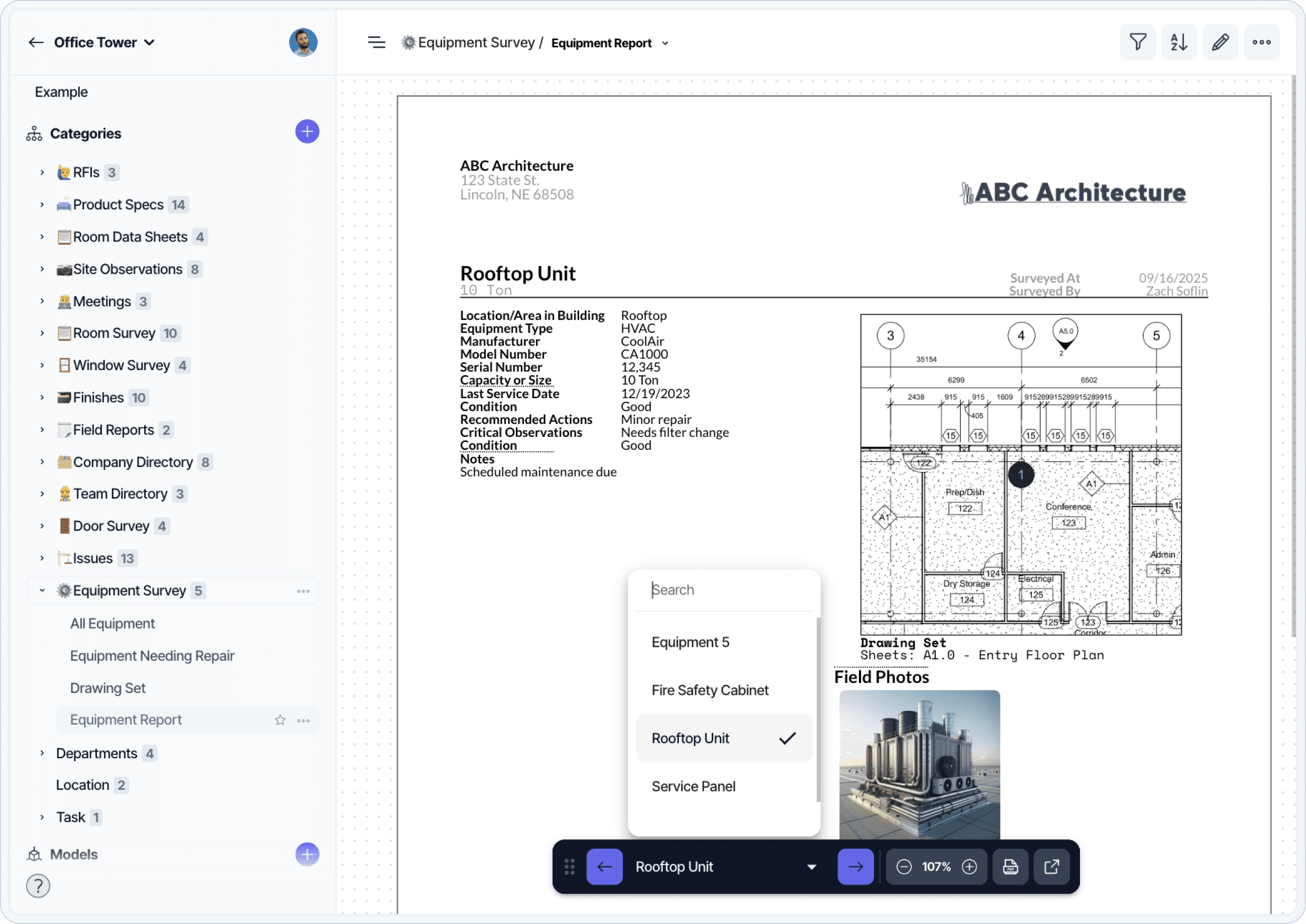
An equipment survey report capturing observable, measurable facts in the field.
Inspections involve interpretation against a defined standard. While the data is still measurable, it requires a reference point to determine whether a condition is acceptable. The output is binary or threshold-based, such as passing a code requirement or failing to meet a spec.
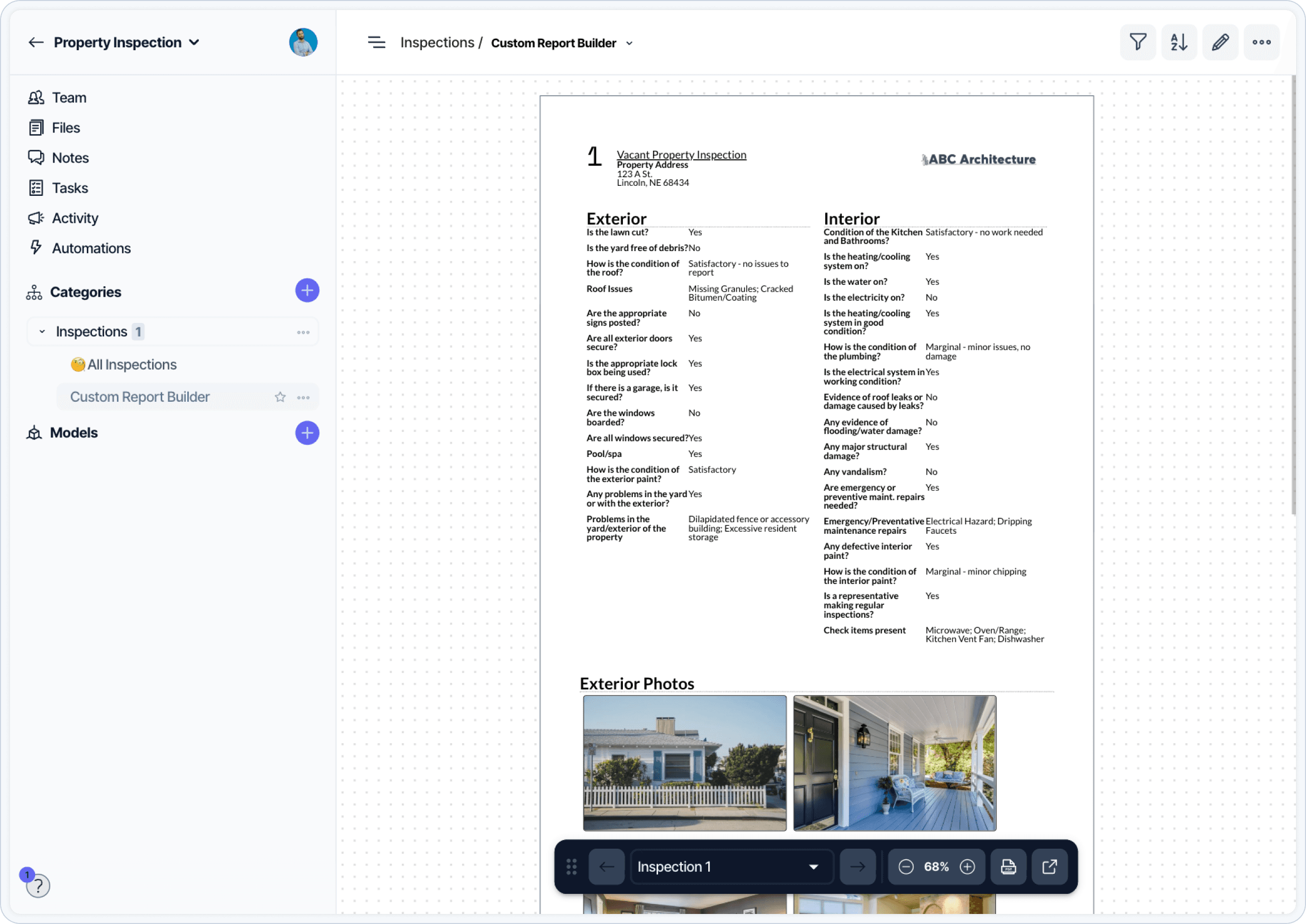
A property inspection report verifying conditions against code and contract requirements.
Assessments involve qualitative judgment. The same condition might be assessed differently depending on context, criteria, or the person performing the task. Assessment data is often used to support decisions that cannot be made using measurements alone, such as ranking priorities or evaluating usability.
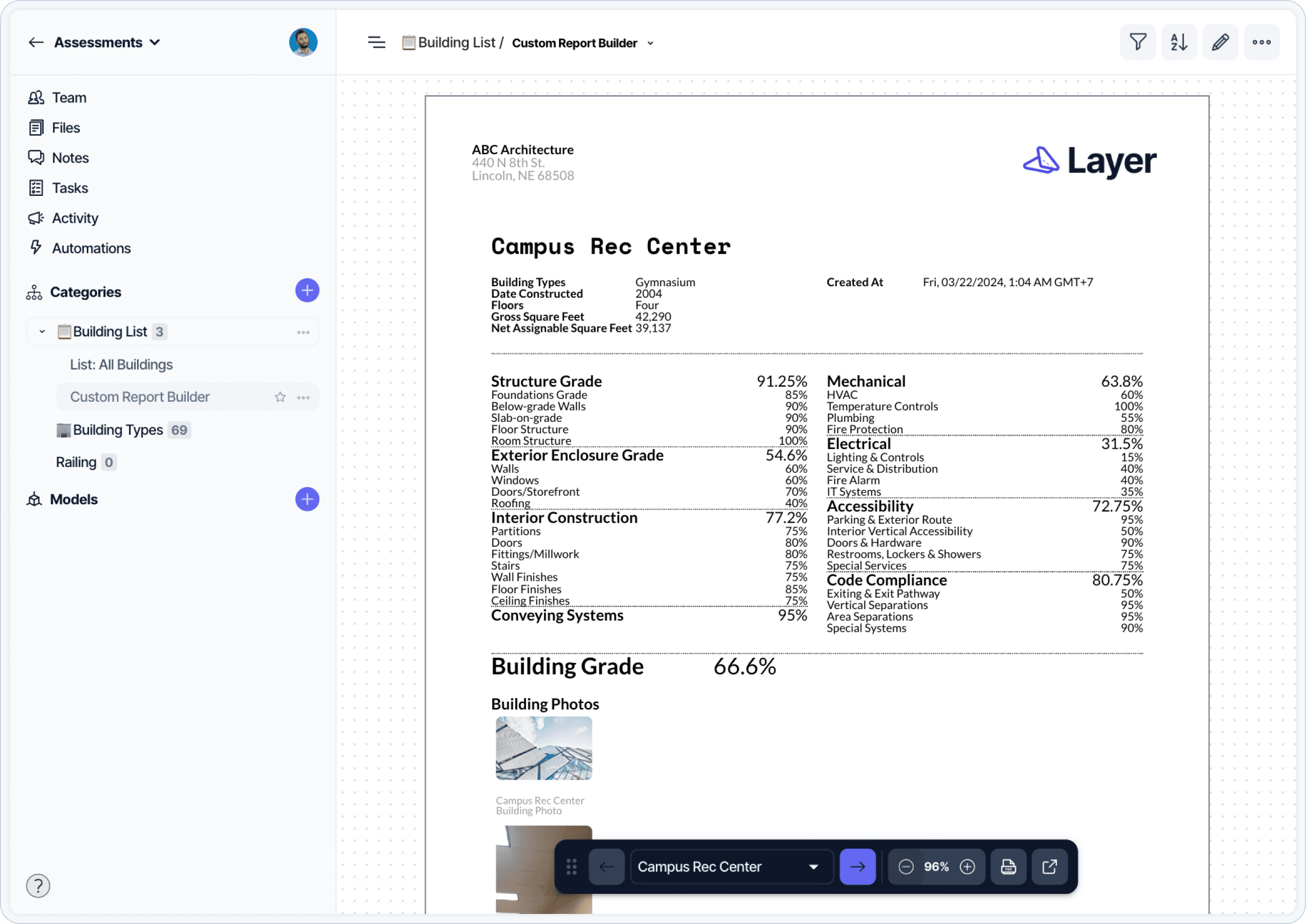
A condition assessment report combining ratings, scores, and narrative recommendations.
Understanding the type of data being collected helps determine how the task should be structured, who should perform it, and how the results can be used. Mixing these data types in a single workflow often leads to unclear or unusable results.
When should you use a Survey, Inspection, or Assessment?
Each task serves a different purpose and occurs at a specific point in the project. The table below outlines what each one is used for and when it typically takes place.
Type | Purpose | Typical Timing |
|---|---|---|
Survey | Document existing conditions | |
Inspection | Verify work meets requirements | |
Assessment | Evaluate condition or performance | Pre-design, operations |
Surveys support documentation. Inspections confirm compliance. Assessments guide decisions. Keeping them distinct helps teams apply the right structure, staff, and tools for each.
When are Surveys, Inspections, and Assessments used in a project?
Surveys, inspections, and assessments each support different activities throughout a building project. This table shows typical examples of how each is used during different phases.
Phase | Survey | Inspection | Assessment |
|---|---|---|---|
Pre-Design | Room dimensions, equipment logs | — | Facility condition scoring |
Design Development | Count of fixtures, spatial attributes | — | Space suitability analysis |
Construction Documents | Furniture quantities, mounting heights | — | Cost or lifecycle prioritization |
Construction Admin | FF&E locations, field measurements | Blocking checks, egress confirmation | — |
Post-Occupancy | Installed signage, updated inventories | Warranty walkthroughs, system startup | Capital project planning |
Tasks may be completed in parallel, but each serves a different purpose. Surveys gather data for design and documentation. Inspections confirm field conditions match requirements. Assessments help prioritize work based on performance or condition.
Who typically performs a Survey, Inspection, or Assessment?

Field staff documenting conditions during a site visit. The role and required skills vary depending on whether the task is a survey, inspection, or assessment.
Each task involves different roles depending on the type of data being collected and how it will be used. This table outlines which team members are commonly responsible for each task and the skills required.
Type | Typical Roles | Required Skills |
|---|---|---|
Survey | Design team, field techs, consultants | Site documentation, measuring tools |
Inspection | Contractors, superintendents, AHJs | Detail interpretation, code familiarity |
Assessment | Architects, engineers, facilities staff | Strategic planning, system knowledge |
Assigning the right task to the right role ensures that fieldwork results are accurate, code-compliant, or actionable depending on the goal.
What data structure does each task need?
Surveys, inspections, and assessments produce useful results only when the data is organized correctly. Each task requires different inputs and formatting to match its purpose.
Type | Structural Requirements |
|---|---|
Survey | Field categories, consistent labeling, mapped locations |
Inspection | Defined pass criteria, structured checklists, timestamps |
Assessment | Rating scales, evaluation guidelines, open text fields |
Without a defined structure, the results may be incomplete or unusable in downstream reporting or workflows.
Do surveys, inspections, and assessments show up on the same project?
The same room may involve multiple types of tasks, each with a different purpose and output. The example below shows how a survey, inspection, and assessment might apply to lighting in a public library renovation.
Task Type | What is done | What it supports |
|---|---|---|
Survey | Record the location, count, and type of light fixtures | Document existing conditions for reference or design |
Inspection | Confirm emergency lighting meets code for placement and illumination | Verify life safety compliance before occupancy |
Assessment | Evaluate overall lighting quality in public areas | Prioritize upgrades based on performance or user needs |
Separating these tasks ensures that teams know what was documented, what was verified, and what needs to be improved.
Why does it matter to separate surveys, inspections, and assessments?
These tasks support different types of decisions and require different documentation. When they are combined or mislabeled, teams risk collecting the wrong information or missing what the client actually needs. Keeping them separate helps ensure that the work is structured correctly and aligned with its intended use.
Further Resources
The Building Survey Process Explained. The deeper guide on building surveys, the most common AEC survey type.
The Layer Guide to Property Inspections. The deeper guide on property inspections used by architects and owner reps.
What is ASTM E2018-15? A Guide for Building Assessments. The ASTM standard for property condition assessments.
Everything You Need to Know About Property Inspections in Commercial Lending. Property inspections in commercial real estate.
An Introduction to Equipment Inventory Surveys. The specialized survey type for MEP and equipment.
5 Methods for Documenting Existing Conditions. Practical methods for capturing existing-conditions data.
Building Survey Workflow Template in Layer. For survey-style data collection.
Property Assessment Workflow Template in Layer. For assessment-style condition evaluation.
ASTM E2018 Assessment Workflow Template in Layer. For property condition assessments using the ASTM standard.